
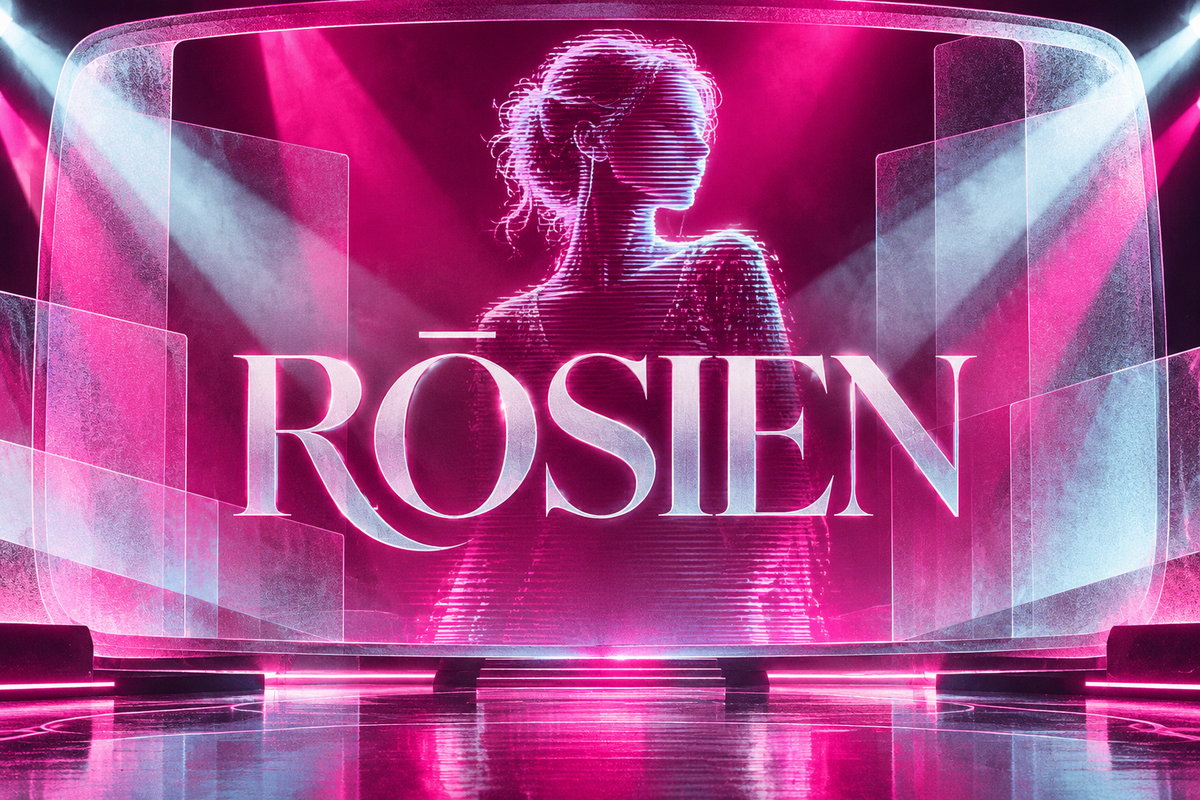
Virtual artist RŌSIEN has appeared on South Korean broadcaster SBS’s weekly music show Inkigayo, which showcases current releases and awards a weekly chart winner. SBS published a performance clip of “Tiga Tiga” marked for its October 25 broadcast. Released September 19, the song combines AI vocals with credited human songwriting and production: Hong Jin-woo and Nam Ji-hoon wrote the lyrics and composition, Nam handled the arrangement, and Big Earth Little Me is credited with AI vocal design and production, instruments and programming. Presented by UYU MEDIA LAB as part of its Even The City project, RŌSIEN is promoted as a virtual artist rather than a conventional human vocalist. The released credits do not identify the underlying vocal-generation model, and the broadcast listing does not establish that the vocals or visuals were generated in real time.
The appearance follows another Korean breakthrough for synthetic vocals similar to the previously related story: MEOMURU’s “The Adult I Dreamed Of” reached No. 3 on Melon’s Top 100 on October 14 before subsequently reaching No. 2 on Melon’s real-time TOP100. Additional reporting since our original AMBI article has provided more detail about how that song was made. In an October 25 interview with The Korea Economic Daily, the production team behind MEOMURU explained that humans wrote the lyrics and directed the creative process, while Suno contributed melody, arrangement and vocals. The team selected and refined the generated material, using Cubase for additional production, editing, mixing and mastering. The projects illustrate different AI routes into mainstream music: MEOMURU through audience listening and viral discovery, and RŌSIEN through a virtual-artist identity and television promotion. Both retain identifiable human creative contributions, although their production methods were different. MEOMURU’s use of Suno is disclosed, while RŌSIEN’s vocal technology remains unspecified in the release credits reviewed.
Join the discussion