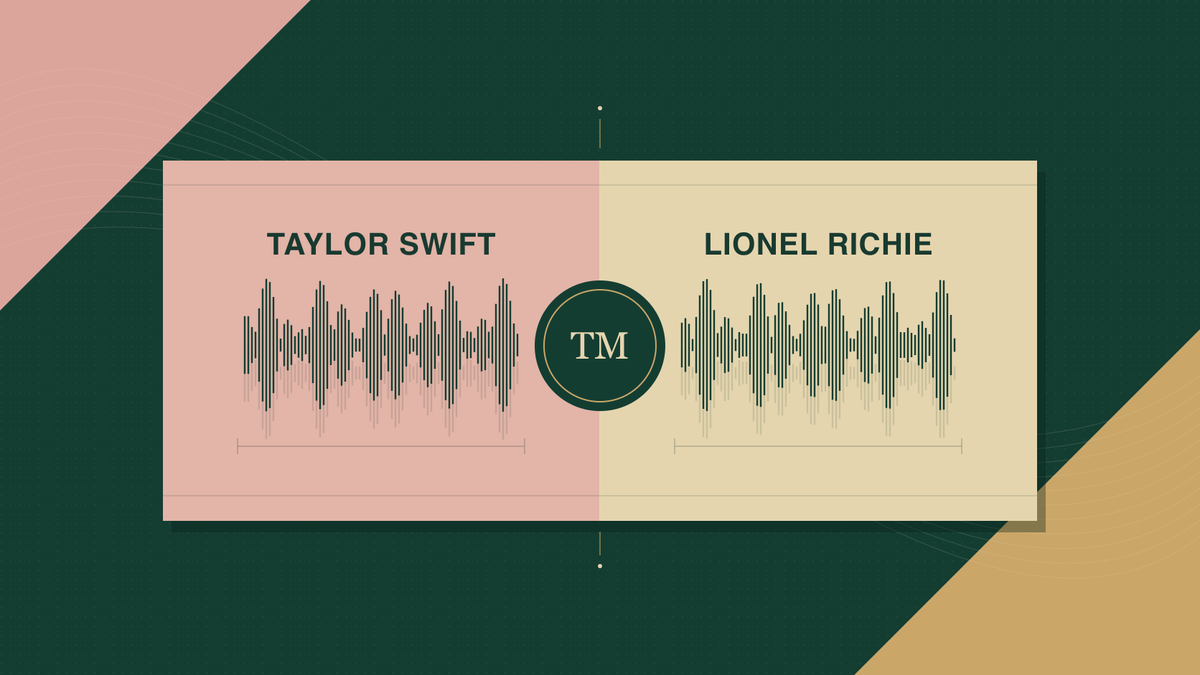
Taylor Swift, Lionel Richie and other entertainers are seeking trademark protection for recognizable recordings of their voices as artificial intelligence makes it increasingly easy to imitate artists without their permission. Swift's company, TAS Rights Management, expanded its trademark applications into the United Kingdom, European Union and Australia in October 2026, following earlier U.S. filings covering spoken phrases including "Hey, it's Taylor Swift." Lionel Richie filed similar U.S. applications in June for recordings of himself saying recognizable phrases such as "Hello, is it me you're looking for?" and "All night long."
Can Artists Actually Trademark Their Voices?
Trademark law protects distinctive sounds that identify the commercial source of goods or services, but registering a specific vocal phrase does not give an artist exclusive ownership of their entire voice. Unlike copyright, which protects musical compositions and sound recordings, trademarks may provide additional grounds to challenge unauthorized AI-generated impersonations when their commercial use creates consumer confusion. An AI-generated advertisement imitating an artist's registered spoken phrase could potentially raise trademark infringement concerns, while a synthetic vocal performance that merely resembles the artist may present different legal questions. Whether these registrations can effectively prevent unauthorized AI voice cloning remains largely untested in court.
Voice Rights and the Growing AI Licensing Debate
Artists already have legal protections against unauthorized impersonation through rights of publicity, unfair competition laws and certain performers' rights, although these vary across jurisdictions. Tennessee's 2024 ELVIS Act strengthened protections against unauthorized AI voice replicas, while the proposed federal NO FAKES Act seeks to establish nationwide protections for digital recreations of voices and likenesses. For music publishers and record labels, these developments highlight the growing distinction between licensing a composition, licensing a sound recording and obtaining permission to replicate an artist's vocal identity. Trademark protection could provide another enforcement tool, but it does not replace copyright licensing or other applicable rights, and the legal boundaries of AI-generated voice imitation remain unresolved.
Join the discussion